

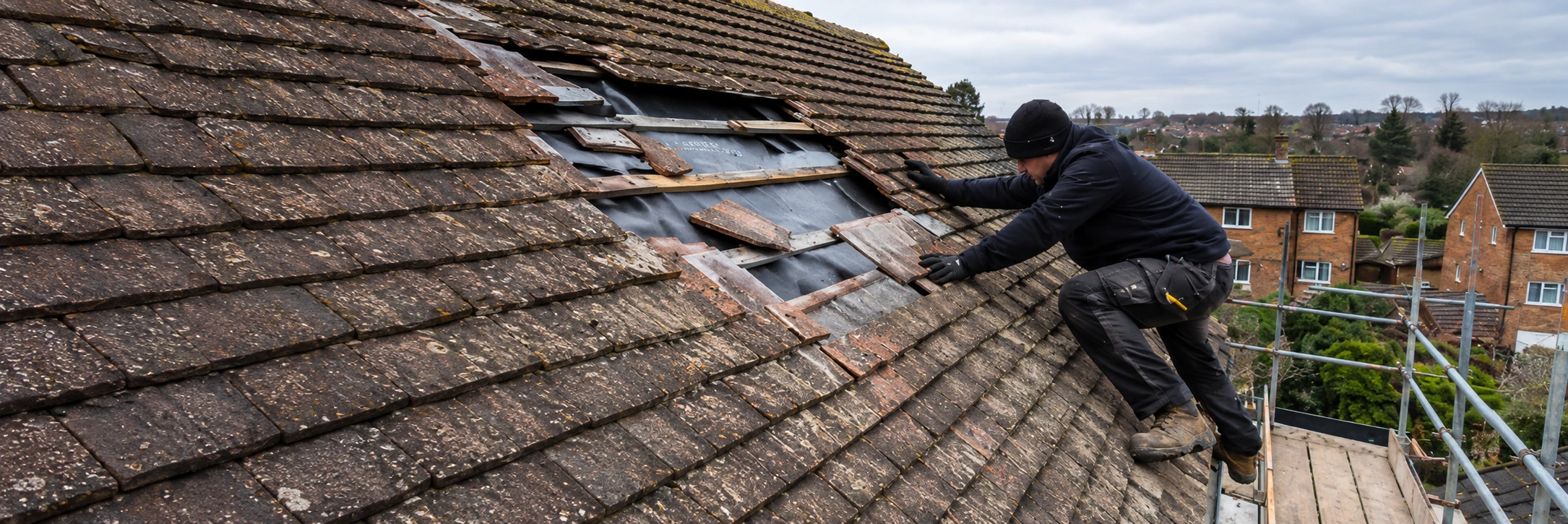
It seems like nothing at all. Just one small roof tile set a few centimetres lower than its peers, just out of place from the others. Most of us figure that it’s something that can wait until the next time we have the roof maintained. It’s what we don’t see starting to happen when the first rainstorm rolls around: the way water finds its way through, seeps into the wood, and starts the process of destruction.
Why Do Roof Tiles Slip?
- Corrosion of fixings is the most common reason in the case of roofs more than 20 years old. Tiles may be nailed to roof sheets, clipped with metal clips, or held together using mortar. Fixings of all kinds deteriorate with time and in the presence of moisture. As soon as the fixing fails, the next tile is supported only by the others and by the force of gravity.
- Deterioration of battens adds to the problem. As soon as the water passes through the cracks in the roof or failed fixings, it gets absorbed by the wood battens over several months. Rotten wood cannot hold nails anymore, and even if the tiles are good, they can get moved due to the deterioration of the battens. When deterioration extends beneath the visible roof covering, simply replacing the slipped tile may not resolve the underlying problem. A professional roof inspection in Kent can assess the condition of the battens, underlay and surrounding roof structure.
- No storm is needed for wind uplift. If the roof tile is partially detached from the roof structure, wind will create an area of lower pressure on the underside of the tile, especially in ridges, along the edge and at gable ends. Even a well-fixed roof tile can get displaced due to corrosion in a few gusty days.
- The freeze thaw process is an internal force acting on the tile itself. The water collected through wet weather becomes frozen and expands, causing micro-cracks and damaging fixation areas each winter season without any obvious external indication until slippage takes place.
- Pedestrian traffic causes tile slippage much more often than the average homeowner thinks. Walking on clay or concrete tiles to clean the gutters or check the chimney leads to damage to the hooks and slipping of tiles even though it seems like nothing will happen.
How Dangerous Is a Slipped Tile?
Physically, the risk is real. Clay and concrete roof tiles are heavy. A tile that slides off a pitched roof above a path, driveway, or doorway during high winds can cause serious injury. This is not a remote possibility on a property where slipped roof tiles have gone unaddressed.
Structurally, the damage compounds quickly. The underlay beneath tiles is a secondary barrier; prolonged direct water exposure degrades it rapidly. Water then reaches battens and rafters. If deterioration has spread beyond the individual tiles and into the supporting roof structure, repeated tile repairs may no longer be the most appropriate solution. Our insight into roof replacement services in Kent explains the situations in which replacement may become a more practical long-term option. When it comes to the structural level of timber rot, this means that instead of simply replacing the tiles, a more complicated task is involved which requires scaffolding and structural repairs. The mold growth is evident within 24-48 hours after saturation of the roof area. Heat loss through tile gaps drives up energy bills month on month.
RW Roofing & Property Services Ltd handles roof repairs in Canterbury, roof repairs in Maidstone, roof repairs Ashford, and roof repairs Folkestone, covering slipped tile repairs and full tile inspections across Kent, including batten checks, underlay assessments, and lead work where water has already tracked through. Richard has over ten years of hands-on roofing experience, personally overseeing every job from first assessment to completion.