
There is one thing that few will know until it’s already too late: the number of years that a roof has been on a house does not mean very much at all. The roof made out of slate that was put onto a building one hundred years ago may well have more integrity than a roof made out of concrete tiles that is half as old. Understanding roof lifespan UK standards comes down to just three things that will determine the future of your roof. Understanding how long different roofing materials last is only part of the picture. Regular inspections, maintenance and timely repairs from professional roofers in Kent can help identify problems before they significantly reduce the lifespan of your roof.
Roofing Material Life Expectancy
- Natural Slate: 100 to 150 years. Highly dense, impermeable, and resistant to freezing. Usually, the tiles will survive beyond the fittings
- Clay Roof Tiles: 60 to 100 years. The tiles are highly durable and outlive mortar and nails used to hold them
- Concrete Tiles: 40 to 60 years. More absorbent than clay, making them susceptible to freeze-thaw surface erosion
- Metal Roof: 40 to 70 years. Depends on coating and control of corrosion
- GP Fibre Glass: 30 to 50 years; seamless installation ensures there will be no joints to fail
- EPDM Rubber Flat Roof: 25 to 40 years. Can withstand seasonal expansion and contraction without splitting
- Torch-On Felt Roof: 15 to 25 years. Likely to split and suffer from punctures where drainage is inadequate
- Asphalt Shingles: 12 to 20 years. Lift in strong winds and quickly deteriorate in wet conditions
The lifespan of any roof also depends on the quality of installation, maintenance and the condition of individual components. For more insight into choosing and maintaining tiled roofing materials, read our guide to roof tiling in Kent.
How Does UK Weather Impact Roofs?
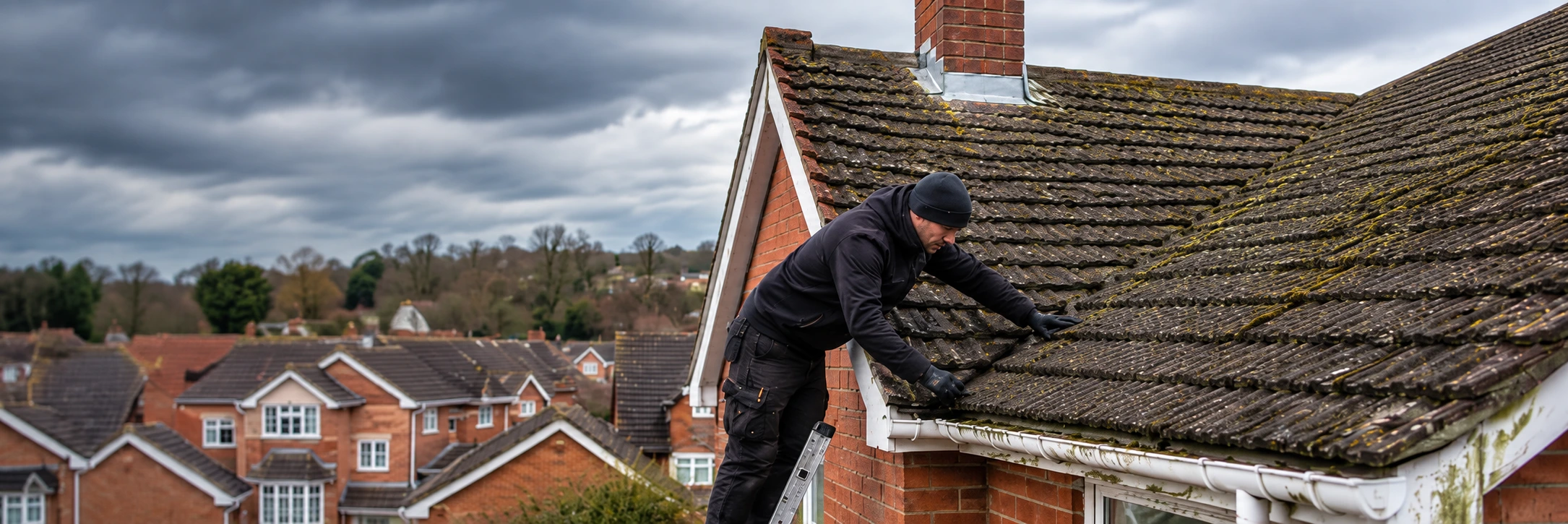
Rain is constant pressure. If there is any gap in the flashing or crack in the tiles, it provides access for water. Frost makes it worse: as moisture in the porous bodies of the tiles freezes and thaws season after season, it causes cracks to widen.
Moss is a British issue. Moss grows due to moisture, shade, and lack of sun rays, while moss, retaining moisture between its layers, makes drainage impossible and affects the state of material below the tiles. Moss can easily be cleaned by pressure washing; however, it damages the tiles themselves and only the use of biocide can help.
Wind attacks fastenings but not tiles. After 20 years of operation, corrosion of the nails and clips allows the tiles to move during storms, although the tiles may be in good condition.
Age or Condition: Which is the Best Criterion?
Condition, of course. The roof that shows signs of slipped tiles along several rows, persistent leaks even after fixing, wet insulation in the loft, and lifting of the flashing around the chimney speaks volumes. Age sets our expectations; condition determines our actions. Whether you need roofing Canterbury, roofing Ashford, or roofing Folkestone, a professional inspection will always assess condition over age.
How Long Does a Roof Last?
Keep your gutters clean two times a year. Get the cracked tiles repaired without further ado in order to prevent damage from water to the wood underneath. The roof should be checked once each fall season and also after any major storm. Watch out for any stains on the rafters or moisture in the loft insulation. These easy steps will increase the lifespan of the roof by years. For ongoing maintenance and repairs, quality roofing services Canterbury can make all the difference in how long your roof remains sound.